A Critical Decision: Preserving the Mason Log Home for the Future
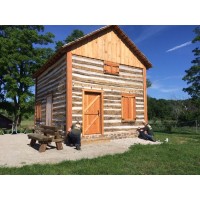
In 2015, the Jefferson County Parks Department, with the support of dedicated volunteers and generous donors, completed the restoration of the Mason Log Home at Dorothy Carnes Park East. Hidden for more than a century inside the walls of an original 1850 farmstead, the log home was carefully uncovered, documented, and rebuilt over a two-year period by park staff and volunteers.
During the restoration, it was discovered that many of the original logs had been cut or removed during earlier modifications to the structure. To remain true to the home’s historic character, replacement logs from the correct time period were sourced from regional building demolitions and hand-cut to fit the structure. Approximately 30 percent of the home’s original logs were replaced as part of the restoration. The completed project quickly became a focal point of the Carnes Park farmstead area, offering visitors a rare and meaningful glimpse into early settlement-era construction.
When restoration work first began in early 2013, crews noted something unexpected. Once the original siding was removed, the exposed logs were surprisingly bright, showing very little fading or weathering from sun and rain. This indicated that the logs had not been left uncovered for long. Like many pioneer families, the Mason family likely added siding soon after construction to protect the home and improve insulation during harsh Wisconsin winters.
According to local historian Julia Ince, while log construction was common in early Wisconsin settlements, it was uncommon—and socially undesirable—for homes to remain unsided. As local sawmills became established, adding wood siding was considered a sign of progress and practicality. Leaving logs exposed would have been viewed as primitive rather than authentic to the time period.
Over the past decade, the exposed logs have been treated multiple times with wood preservatives and protective coatings. Despite these efforts, time and the elements have taken a toll. Unlike some regional log structures built with tight-fitting cedar logs and traditional Scandinavian joinery, the Mason Log Home was constructed using a more rudimentary technique. Square notches, wide gaps filled with chinking, and the use of softer wood species—including ash, red oak, and basswood—have made the structure more vulnerable to moisture intrusion and deterioration.
Over the past decade, the exposed logs have been treated multiple times with wood preservatives and protective coatings. Despite these efforts, time and the elements have taken a toll. Unlike some regional log structures built with tight-fitting cedar logs and traditional Scandinavian joinery, the Mason Log Home was constructed using a more rudimentary technique. Square notches, wide gaps filled with chinking, and the use of softer wood species—including ash, red oak, and basswood—have made the structure more vulnerable to moisture intrusion and deterioration.
After extensive evaluation and consultation, Jefferson County Parks staff made the decision to return siding to the exterior of the log home. This approach aligns with both historic construction practices of the late 1800s and modern preservation standards aimed at protecting original materials. Importantly, the interior of the cabin will remain unchanged, continuing to showcase the hand-hewn logs, construction methods, and joinery that define the structure’s historical significance.
On Tuesday, February 17, a crew from Reidl and Son began installing horizontal cedar siding on the exterior of the Mason Log Home. This work is intended to slow further deterioration, protect the remaining original logs, and ensure the structure can continue serving as an educational and interpretive resource for generations to come.
While some visitors may prefer the rustic look of exposed logs, this project reflects a commitment to long-term preservation and historical accuracy. By reintroducing siding—just as the Mason family likely did more than 150 years ago—Jefferson County Parks is taking a thoughtful and responsible step to safeguard one of its most valued historic structures.